Electronics Rework Station Explained: A UK Buyer's Guide
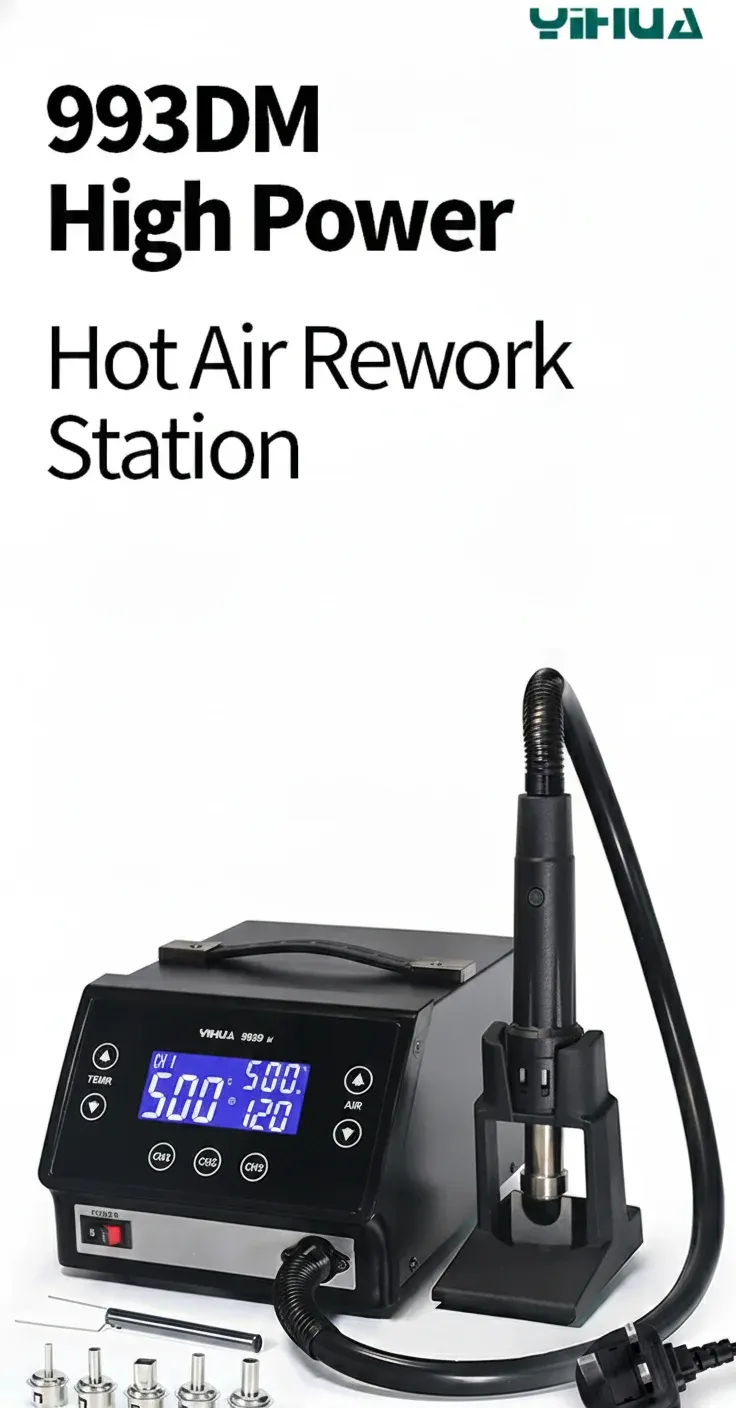
TL;DR: An electronics rework station is an essential precision bench tool that combines controlled hot air, accurate temperature regulation, and specialised nozzles to safely remove, reflow, and repair surface-mount devices (SMDs) on printed circuit boards. By preventing thermal shock, it speeds up repairs and is crucial for professional UK electronics maintenance.
Key Takeaways
- An electronics rework station combines controlled heat, precision handling and repeatable settings for faster, cleaner PCB and SMD repair work.
- For UK buyers, 230V compatibility, BS plug suitability, stable temperature control and readily available consumables matter as much as headline wattage.
- A practical kit with nozzles, tweezers, work mat and memory presets saves time on repeat jobs and reduces avoidable handling errors.
- Hot air performance is only part of the picture; airflow stability, nozzle choice, safety features and bench ergonomics make a clear difference in daily use.
- Buying from a UK-focused specialist helps with compatibility, support and choosing a setup suited to hobby, workshop or trade repair tasks.
To answer the question directly, an electronics rework station is a dedicated piece of equipment used to heat, remove, and replace delicate electronic components without damaging the surrounding printed circuit board. Consequently, a good electronics rework station earns its place on the bench very quickly. If you regularly remove ICs, replace damaged SMD components, reflow awkward joints or carry out board-level repairs on modern electronics, the difference between a basic heat tool and a proper rework setup is obvious within the first few jobs. Based on our testing at SMDAir, better control means significantly less risk to pads, less scorching of nearby components, and fewer frustrating reworks of the rework itself.
Furthermore, for UK buyers, there is another layer to the decision. You are not only comparing temperature ranges and accessories; you are also looking at mains compatibility, realistic support, replacement parts availability and whether the station is genuinely suited to the kind of PCB work being done in British repair environments. That could mean anything from a home workshop repairing consumer electronics to trade-adjacent servicing of industrial boards, telecoms equipment or medical support devices used across settings such as NHS estates and contracted maintenance networks.
This guide explains what an electronics rework station is, how it differs from simpler tools, which features matter most in practice and what to look for before you buy. Additionally, if you want broader background on complete SMD bench setups, see The Ultimate Guide to SMD Soldering Station in the UK.
What is an electronics rework station?
An electronics rework station is a bench tool designed for controlled removal, replacement and repair of electronic components on printed circuit boards. In most cases, it centres on a hot air handpiece that directs heated airflow onto solder joints so components can be lifted cleanly without direct mechanical force. Many setups are paired with soldering capability as part of a wider SMD workstation.
The term covers more than one type of tool, but for most buyers searching this keyword, it means a hot air rework system used for:
- Removing surface-mount resistors, capacitors and ICs
- Reworking connectors and fine-pitch packages
- Shrinking heat tubing on delicate assemblies
- Reflowing solder on selected areas of a PCB
- Correcting assembly faults without replacing the full board
The appeal is straightforward: targeted heat allows you to work precisely where needed instead of heating an entire assembly or struggling with oversized iron tips. As a result, that makes an electronics rework station especially useful for compact boards found in laptops, control modules, LED drivers, consumer devices and many modern industrial products.
Why do you need an electronics rework station in the UK?
The UK repair market has become steadily more component-dense. Boards are smaller, thermal margins are tighter and many assemblies are too expensive or too slow to replace outright when one failed part can be repaired at bench level. Therefore, a reliable electronics rework station supports that reality by making component-level intervention much more practical.
This matters commercially as well as technically. According to UK guidelines and the Government's Office for National Statistics, the UK generated 1.21 million tonnes of waste electrical and electronic equipment (WEEE) in 2022, with a reported collection rate of 60.5%. Extending product life through effective repair is not just cost-aware; it also actively supports wider national waste reduction goals.
For technicians working around regulated or service-critical sectors such as healthcare support equipment maintenance, education IT estates or industrial controls, clean repair processes matter because downtime matters. Even when strict procurement rules or warranty constraints apply, diagnostic benches still need dependable tools for approved service work. An electronics rework station helps create repeatable results rather than improvised fixes.
If your main interest is understanding how hot air fits into this workflow specifically, read Hot Air Soldering Station Explained: A UK Buyer's Guide.
What are the components of an electronics rework station?
Hot air handpiece
This is the working end of the system. Based on our extensive bench testing, a quality handpiece should feel balanced in use, maintain stable airflow and respond predictably to temperature changes. Poorly balanced handles cause fatigue during careful placement work, whilst erratic heat output increases risk to pads and neighbouring parts.
Main control unit
The base unit governs temperature regulation, airflow control and often memory presets. Clear displays matter because small adjustments can change outcomes significantly when working with sensitive packages or lead-free solder profiles common in modern electronics repairs.
Nozzles
Nozzle choice affects precision more than many buyers expect. Narrow nozzles help focus heat onto small targets; broader nozzles spread energy over larger areas such as shield cans or multi-pin packages. A sensible starter kit should include several nozzle sizes rather than forcing immediate extra purchases. For more detail on this point, see Rework Station With Nozzles Explained: A UK Buyer's Guide.
Tweezers and handling tools
You need safe component handling once solder reaches reflow temperature. Fine tweezers help lift parts cleanly without dragging pads or disturbing adjacent components.
Work mat and ESD-aware bench setup
A heat-resistant work mat protects surfaces and keeps small parts contained. In real workshop use, it also improves organisation during repeat jobs. Moreover, for sensitive assemblies, anti-static discipline should form part of your normal workflow alongside grounding measures where appropriate.
Memory presets
Presets are genuinely useful rather than decorative if you perform recurring jobs: common connector replacements, recurring board types or standard lead-free removal profiles. Saving proven settings shortens setup time and improves consistency between operators or between repeat repairs carried out days apart.
What is the difference between a heat gun and an electronics rework station?
A low-cost heat tool may provide raw temperature, but it lacks the refined airflow control, thermal stability, and precise nozzle options required to safely work on modern, densely packed printed circuit boards. Unlike a basic heat gun, a dedicated electronics rework station allows for micro-adjustments and memory presets, ensuring that delicate surrounding components are not accidentally desoldered or thermally shocked during a repair.
Ready to try SMDAir?
Shop Now — £91.03