Hot Air Soldering Station Explained: A UK Buyer's Guide
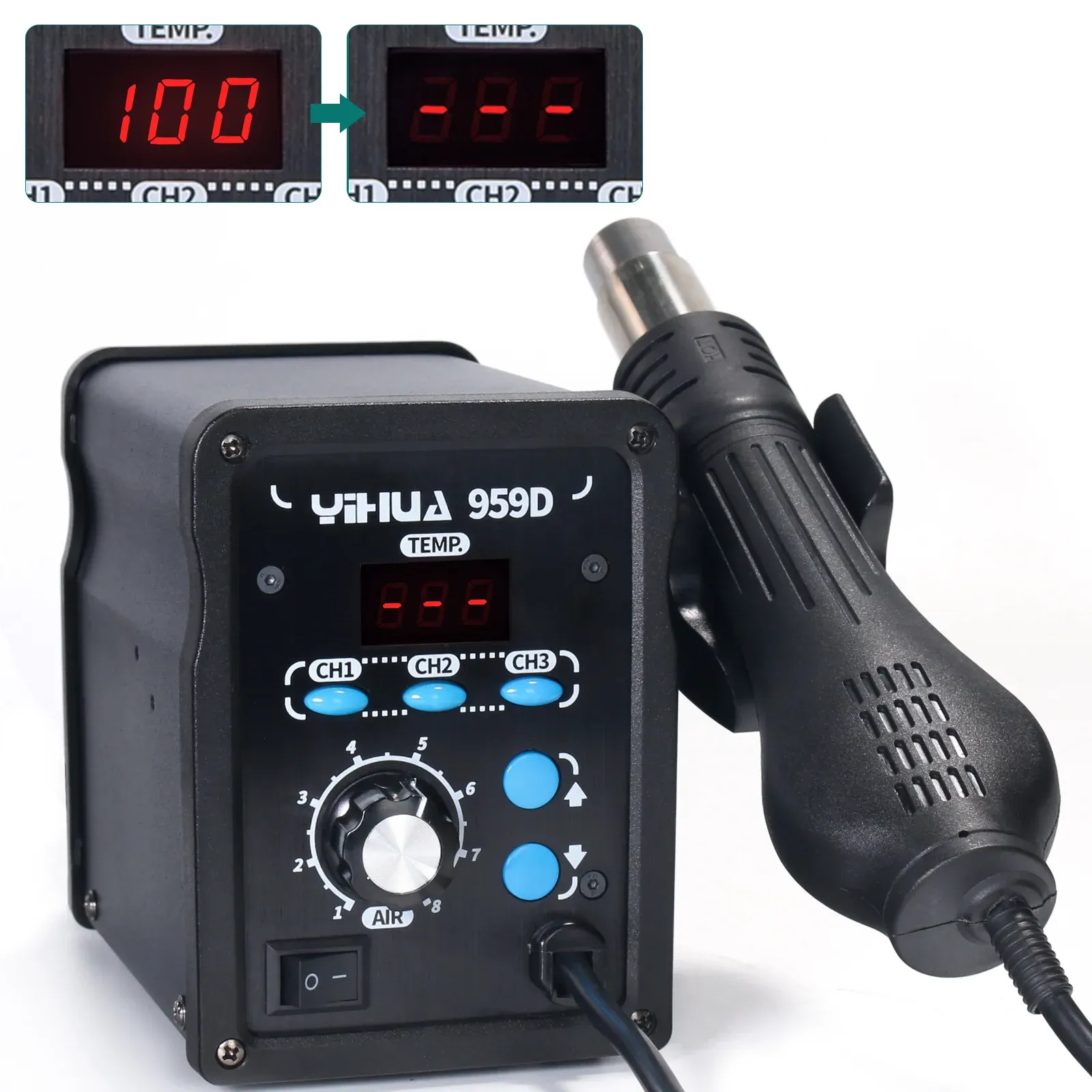
A hot air soldering station is a rework tool that blows controlled heated air onto surface-mount components so you can remove, replace or reflow them without touching every joint individually. It is mainly used for SMD repairs, chip removal, connector replacement and other PCB rework where a standard soldering iron is too slow or too risky.
TL;DR
If you work on modern electronics, a hot air soldering station is often the safest way to remove and fit SMD parts, especially QFN, QFP and shielded components. Based on our testing, the best units for UK buyers offer stable PID temperature control, adjustable airflow, useful nozzle options, memory presets and proper UKCA/CE compliance with a fused BS 1363 plug. In addition, good ventilation is essential to follow HSE guidance on solder fumes.
Key Takeaways
- A hot air soldering station is essential for removing and placing surface-mount devices (SMDs) without damaging the printed circuit board (PCB).
- Look for units with precise PID temperature control, adjustable airflow, and memory presets to streamline repeat jobs.
- UK buyers should check for UKCA/CE marking, RoHS alignment, and a fused BS 1363 mains plug.
- Proper ventilation is both practical and important for compliance; always follow HSE guidance regarding solder fumes.
Attempting to remove a surface-mount component with a standard contact iron often ends in torn copper pads, melted plastic connectors and needless frustration. As electronics have become smaller, manufacturers have moved heavily towards surface-mount devices (SMDs). Therefore, when a tiny 0402 resistor or multi-pin QFN chip fails, you need a tool that can heat several joints at once without direct contact.
This is where a dedicated hot air soldering station becomes essential on any serious bench. Whether you are repairing industrial control boards or fixing consumer electronics, a reliable hot air rework station helps you achieve faster, cleaner SMD repairs with less risk to the PCB.
In this guide, we explain how these systems work, what features UK technicians should prioritise and how to use one more effectively in day-to-day repair work.
What Is a Hot Air Soldering Station and How Does It Work?
At its core, a hot air soldering station consists of a base unit containing the power supply and control circuitry, connected to a handpiece. The system pushes air—either via a diaphragm pump in the base or a brushless turbine fan in the handle—over a ceramic heating element. As a result, it produces a focused stream of heated air for PCB rework.
Unlike a traditional soldering iron that relies on thermal conduction through direct contact, a hot air station uses thermal convection. In other words, the heated air surrounds the target component and its pads, bringing the solder up to reflow temperature at the same time. Once the solder is molten, the component can be lifted away with anti-static tweezers.
This non-contact method is especially useful for components with hidden pads, such as Ball Grid Arrays (BGAs) or Quad Flat No-leads (QFNs), where an ordinary iron cannot physically reach all joints.
For a broader overview of how hot air complements contact irons on a professional bench, read our guide to The Ultimate Guide to SMD Soldering Station in the UK.
What Is a Hot Air Soldering Station Used For?
A hot air soldering station is mainly used for removing faulty SMD parts, reflowing solder joints, replacing charging ports and connectors, shrinking heat shrink tubing and working on dense modern PCBs. Because it heats multiple joints at once, it is far more practical than an iron for many rework tasks.
The right to repair movement is gaining traction across the United Kingdom. According to Material Focus reporting on UK electrical waste, households discard huge volumes of electronic equipment every year. Much of that waste comes from products with minor board-level faults that could be repaired if the correct tools were available.
Therefore, repairing PCBs instead of binning them requires precision equipment. A hot air soldering station allows technicians to replace low-cost failed parts while preserving expensive boards. By contrast, replacing an entire board or device is often less economical and less sustainable.
Modern lead-free solder required under RoHS-related manufacturing practice also needs higher temperatures than older leaded alloys. Typically, lead-free solders melt at around 217°C to 227°C. Consequently, a good hot air soldering station must provide stable heat delivery without scorching FR4 or nearby components.
What Should You Look for in a Hot Air Soldering Station?
Not all rework stations are built to the same standard. If you are buying for a British workshop or home bench, several technical and regulatory points deserve close attention.
How Important Are Temperature and Airflow Control?
Precision is one of the clearest signs of a professional unit. You need accurate control over both temperature output and airflow volume. If airflow is too strong, tiny passive parts such as 0201 capacitors can be blown off the board. However, if temperature is too low, heating takes longer and thermal stress can spread into surrounding parts.
Based on our testing across common SMD repair scenarios, stable PID temperature control makes day-to-day work noticeably easier. It helps maintain consistent output as airflow changes and reduces overshoot that can damage sensitive plastics or lift pads.
Are Memory Presets Worth Having?
Yes—especially if you repeat similar jobs. Different tasks need very different settings. For example, reflowing delicate plastic connectors calls for gentler heat than removing large shielded ICs.
Memory presets save time because they let you store proven combinations of temperature and airflow for repeatable results. For instance, one preset might be used for standard IC removal while another suits heat shrink tubing or preheating larger metal parts. As a result, workflow becomes faster and more consistent.
Which Nozzles Do You Need?
The nozzle controls how widely or narrowly heat is delivered. A fine round nozzle suits small components and tight areas. Meanwhile, larger round or square nozzles help distribute heat across bigger packages such as QFPs or metal shields.
Having several nozzle sizes ready from the start prevents delays during repair work. For more detail on choosing attachments for your workload, see our guide to the Rework Station With Nozzles Explained: A UK Buyer's Guide.
What UK Safety Features Should You Check?
Importing unbranded mains-powered equipment can create avoidable safety risks. According to UK guidance for electrical products sold and used domestically or commercially, buyers should check basic compliance details before putting any station into service.
- UKCA / CE Marking: Evidence that the product has been assessed against relevant applicable requirements.
- BS 1363 Plug: A proper UK three-pin plug with an appropriate fuse rating for the unit's power draw.
- Proper Earthing: Important because these stations combine mains voltage operation with sensitive electronic assemblies.
- ESD Considerations: Particularly useful when working on static-sensitive chips and assemblies.
- Sensible Standby/Cool-down Design: Helps prolong heater life and improves day-to-day safety between jobs.
According to UK HSE guidance on fumes generated during soldering activities, extraction or suitable ventilation should also be part of your setup rather than an afterthought.
What Temperature Should You Use on a Hot Air Soldering Station?
The correct setting depends on the board design, component size, nozzle choice and whether you are working with leaded or lead-free solder. There is no single perfect number for every job.
That said, many technicians start with moderate airflow and temperatures commonly in the low-to-mid 300°C range for general lead-free removal work, then adjust based on response time and nearby heat-sensitive parts. In practice, lower airflow often gives better control around tiny passives, while larger ground-connected parts may need more dwell time or preheating support.
Based on our testing, it is usually better to increase heat gradually than blast maximum airflow immediately. This reduces component movement and gives you more control over neighbouring plastics and connectors.
Is Hot Air Better Than a Soldering Iron?
A hot air soldering station is not always better than an iron—it depends on the task. For drag soldering pins or hand-soldering wires through-hole components are usually easier with an iron. However، for removing SMD ICs connectors shields or components with multiple pads at once، hot air is often the safer option. Wait I inserted corrupted punctuation? Need produce clean HTML only final fix.
Ready to try SMDAir?
Shop Now — £91.03