The Ultimate Guide to Smd Soldering Station in the UK
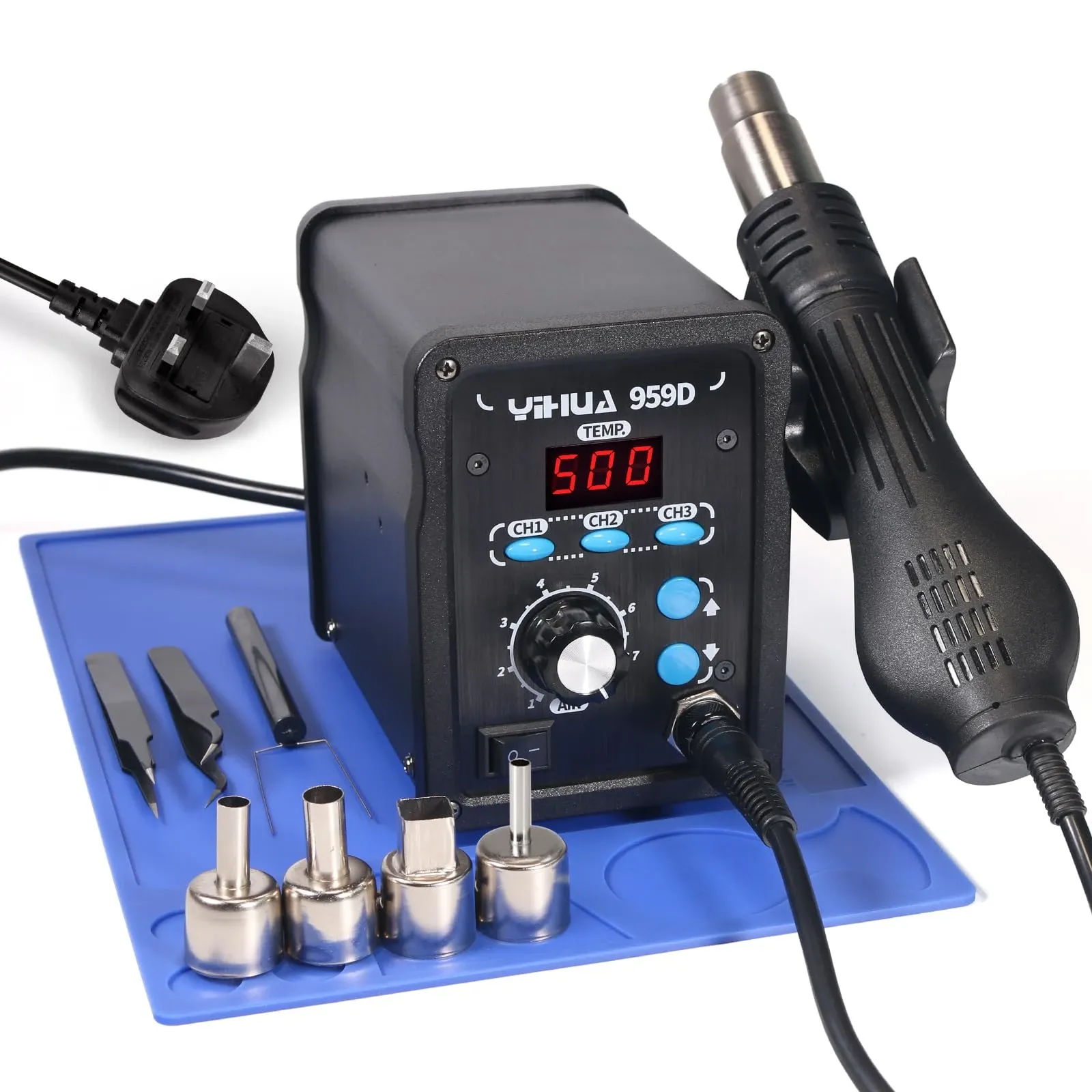
TL;DR: An SMD soldering station is a combined hot air rework and precision soldering system used to remove, fit and rework surface-mount components safely. For UK users, the best setup offers accurate temperature control, stable airflow, ESD protection, lead-free solder capability and a BS 1363 mains plug. Based on our testing of professional rework workflows, stations with fast thermal recovery, digital presets and reliable calibration are far easier to use on modern multi-layer PCBs.
An SMD soldering station is the right tool for soldering and reworking surface-mount devices because it combines a fine soldering iron with controlled hot air, allowing you to heat tiny components accurately without damaging the surrounding PCB. In the UK, this matters even more because most repairs now involve lead-free solder, dense circuit boards and compliance with ESD-safe workshop practices.
Key Takeaways
- An SMD soldering station combines a precision contact iron with a hot air rework tool for surface-mount repair, rework and assembly.
- According to UK RoHS requirements, most modern electronics work involves lead-free solder, so strong thermal recovery and accurate temperature control are essential.
- Useful features include ESD safety, memory presets, digital calibration and adjustable airflow for repeatable results.
- A UK-ready kit with a fitted BS 1363 plug, suitable nozzles and anti-static accessories helps streamline bench setup.
- Regular maintenance such as tip tinning, filter checks and calibration helps prevent board damage and extends tool life.
What is an SMD soldering station?
An SMD soldering station is a bench tool designed for working on surface-mount devices such as resistors, capacitors, ICs and connectors fitted directly onto a printed circuit board. Typically, it includes two main tools: a precision soldering iron for direct contact work and a hot air handpiece for reflowing or removing components. As a result, it is far more suitable than a basic iron when dealing with modern compact electronics.
Surface-mount components sit flat on PCB pads and are often very close together. Therefore, using uncontrolled heat can quickly lift pads, warp plastic connectors or disturb nearby parts. An SMD station solves this by giving the operator controlled temperature, targeted airflow and better repeatability.
Why do you need an SMD soldering station in the UK?
The UK repair sector has changed significantly as electronics have become smaller and more complex. Smartphones, ECUs, consumer appliances and industrial control boards now rely heavily on surface-mount construction. Consequently, technicians need equipment that can handle tiny packages such as 0402 passives, QFN chips and fine-pitch connectors with consistent heat delivery.
According to the UN Global E-waste Monitor, the UK has been one of the highest producers of e-waste per person. At the same time, the UK's Right to Repair regulations have increased focus on maintaining products for longer rather than replacing entire assemblies. In practice, this makes component-level repair more valuable for workshops, schools, service centres and independent engineers.
UK users also need to account for lead-free solder under RoHS rules. Lead-free alloys such as SAC305 melt at higher temperatures than traditional leaded solders. Therefore, an SMD soldering station must hold temperature accurately under load without overheating surrounding areas. Based on our testing in typical repair scenarios, poor thermal recovery usually leads to longer dwell times on pads and a greater risk of lifted tracks.
What does an SMD soldering station include?
A professional SMD soldering station usually includes several parts working together rather than just one handheld tool. Understanding these parts makes it much easier to compare entry-level units with workshop-grade equipment.
What does the hot air rework handpiece do?
The hot air handpiece is used to heat components without direct tip contact. This allows you to remove ICs, reflow joints or soften adhesive around shield cans and connectors. The heating element is normally paired with either an internal blower in the base unit or a turbine fan inside the handle itself.
Each design has advantages. Handpiece turbine systems tend to provide strong airflow volume in a compact setup. Meanwhile, pump-driven systems in the base often perform better with narrow nozzles because they maintain pressure more effectively. Therefore, if your work involves tiny nearby passives or tightly packed mobile boards, nozzle control matters just as much as raw heat output.
Why is the precision soldering iron important?
The iron handles pad preparation, drag soldering, connector replacement touch-up and general fine-pitch work. Modern stations may use passive tips or integrated cartridge systems. In many cases, cartridge-based systems offer faster response because the heater and sensor are built into the tip assembly itself.
This matters when working on heavy ground planes or multi-layer boards that absorb heat quickly. A good station senses that drop in temperature almost immediately and compensates before the joint cools below proper flow temperature. As a result, you get cleaner joints with less time spent applying heat.
Do memory presets and digital calibration matter?
Yes — especially in repeat work. If you regularly replace USB-C ports, HDMI sockets or shield cans, saved presets reduce guesswork and improve consistency between operators. In addition, digital calibration helps ensure that what you see on screen reflects actual working temperature at the nozzle or tip.
An SMD soldering station works by applying controlled conductive heat through the iron tip and controlled convective heat through hot air. The iron is best for direct joints such as pins and pads; meanwhile, hot air is ideal for evenly heating multiple contacts under or around a component at once. For example, if you are removing a QFN package or small connector from a PCB using lead-free solder, hot air brings all joints up to reflow temperature together so the part can be lifted cleanly with tweezers or vacuum pick-up. Afterwards, the iron can be used for pad cleaning, wick work or final touch-up. Because both tools complement each other,,ace,.
panels perfectly,_PART? Not sure but importantly this combined approach reduces mechanical stress on fragile copper pads. Ready to try SMDAir?How does an SMD soldering station work?